
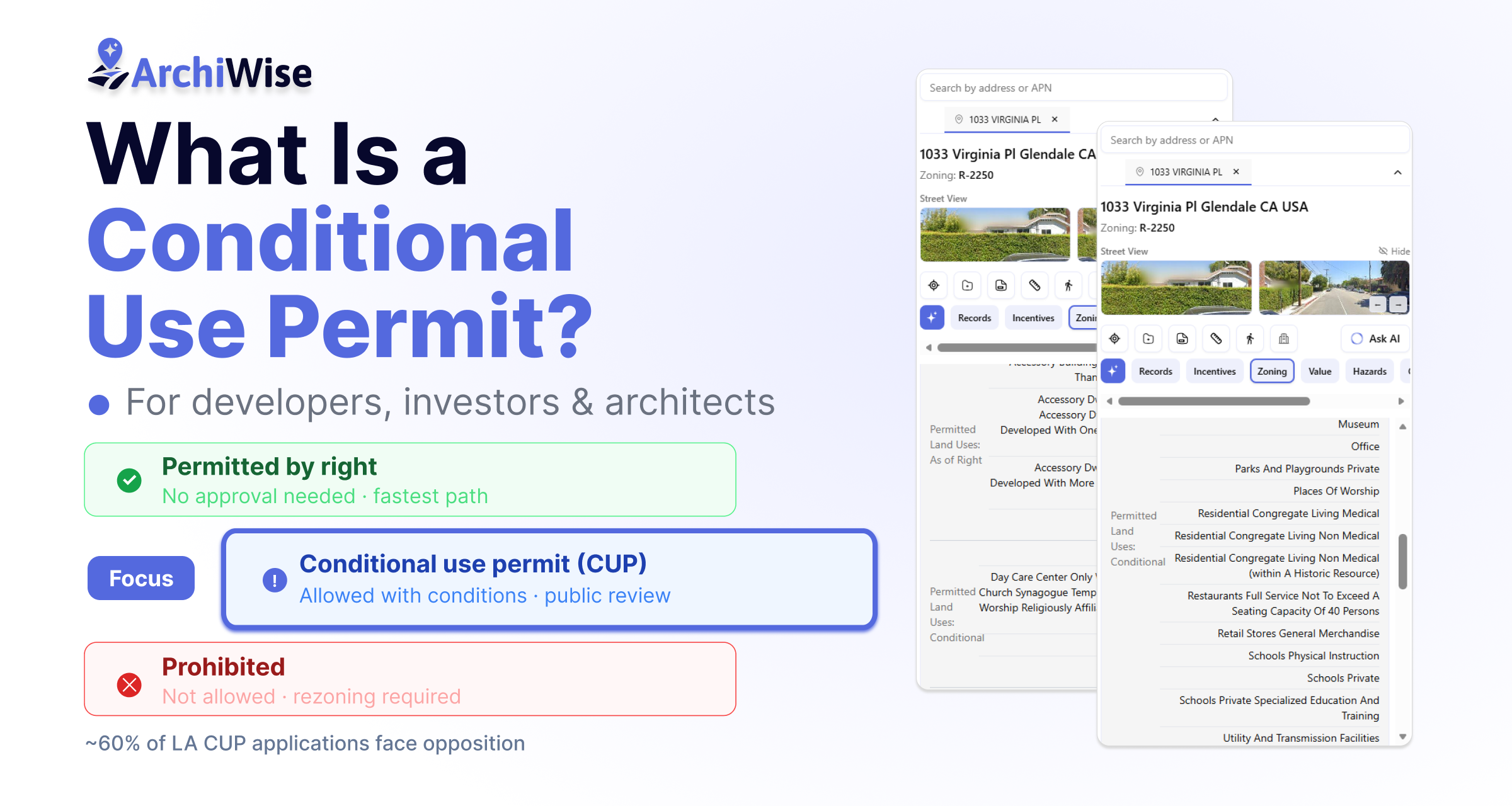

A plain-language guide for developers, investors, and architects.
The Situation Every Developer Runs Into
You find a site. The zoning says commercial. You want to open a bar with live music. Sounds like a natural fit – until the planning department says four words that stop everything:
“That requires a Conditional Use Permit.”
A CUP (Conditional Use Permit) isn’t a rejection. It isn’t a green light either. It’s the city saying: we’ll consider it. Understanding what that means and catching it before you commit to a site, can save you months and tens of thousands of dollars.
How Zoning Classifies Uses
Every zoning district puts land uses into one of three categories:
Permitted by right – automatic. Meet the code, pull permits, build. No hearings, no uncertainty.
Conditional uses – allowed, but only with explicit approval and attached conditions. This is where CUPs live.
Prohibited – not allowed in that zone, period.
Which category your intended use falls into is one of the most important things to know before making an offer.
What Exactly Is a Conditional Use Permit?
A Conditional Use Permit is official permission to use a property in a way that isn’t automatically allowed but isn’t banned either. The city evaluates it case by case and attaches specific conditions to the approval.
Critical detail: conditions attach to the land, not the owner. Sell the property and the next buyer inherits every condition. Always understand what’s attached before you commit.
Why Do CUPs Exist?
Because the same use isn’t right for every location in a zone. A nightclub works on a commercial entertainment strip. Next to a school, it’s a problem. A drive-through belongs on a major road. On a quiet residential street, it generates noise and traffic complaints.
Rather than allowing or banning these uses outright everywhere, zoning codes create a middle category: uses that could be appropriate – depending on the specific site and its surroundings.
Two Real Examples
The drive-through that needed a CUP:
A café is permitted by right in a commercial zone. Add a drive-through, and it’s a different story. In Los Angeles, a drive-through requires a CUP whenever the site is adjacent to or across the street from residential – because of traffic queuing, idling engines, and speaker noise. A Starbucks can open by right on one block; the identical Starbucks with a drive-through one street closer to homes requires months of CUP review and public hearings.
The car dealership in a mixed-use zone:
A developer wants to open a dealership in an area zoned for commercial and light manufacturing. The combination of car storage, sales, and on-site servicing doesn’t fit neatly into the base zoning. Planners need to evaluate traffic, lighting, service bay noise, and operating hours before saying yes. A CUP lets the city approve it with specific conditions rather than a blanket answer either way.
What Uses Typically Require a CUP?
The list varies by city and zone. Always check the specific parcel. Common examples include:
- Nightclubs and entertainment venues with live music or dancing
- Alcohol sales – bars, liquor stores, breweries with taprooms
- Drive-through facilities near residential zones
- Religious institutions or schools in residential zones
- Residential care facilities and group homes
- Hotels and motels in certain zones
- Large-format retail above a square footage threshold
- Mixed commercial and residential uses not listed as permitted by right
- Motion picture and television studios
- Wireless communication towers
What a CUP Looks Like in ArchiWise
Finding out whether a use requires a CUP used to mean searching municipal codes, cross-referencing use tables, and calling the planning department. Hours of work before spending a dollar. For real estate developers doing site feasibility analysis, this manual process is one of the biggest bottlenecks in pre-development research.
Archiwise does it in seconds. Type any address, click the parcel, open the Zoning tab and you immediately see which uses are permitted by right and which require a CUP, pulled directly from the applicable zoning code for that exact parcel.
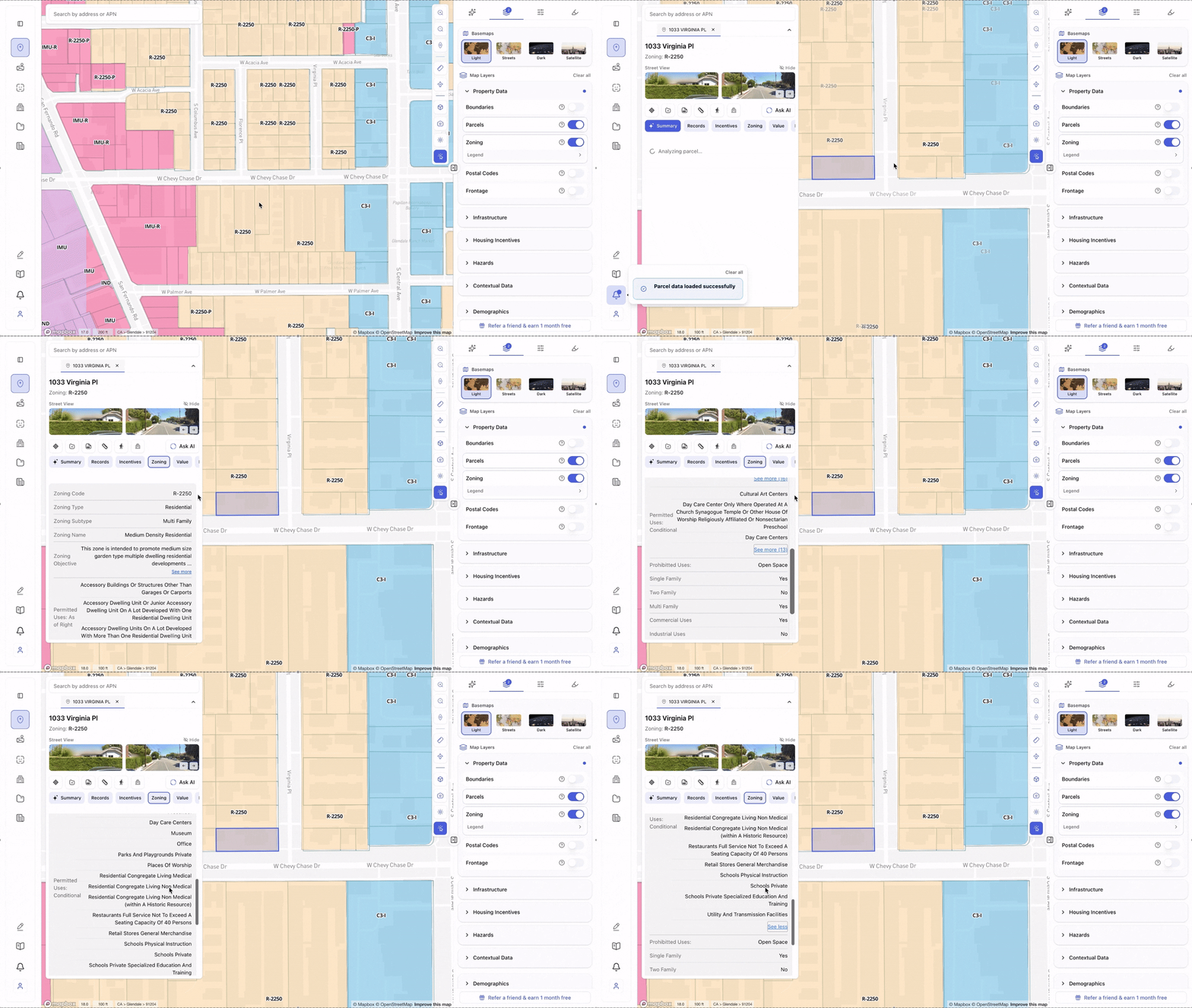
Every use that would require a CUP is listed right there, before any commitment, before any consultants, before any money spent.
Why a CUP Adds Risk
A CUP is not the same as building by right. Here’s what it actually adds to your deal:
Time. Public review takes months minimum. Nearly 60% of CUP applications in Los Angeles face community opposition – contested projects can take over a year.
Uncertainty. No guaranteed outcome. The same use gets approved on one block and denied on the next.
Conditions. Even an approved CUP can restrict operating hours, require extra parking, or mandate periodic review, any of which can make the project unworkable.
Transfer liability. Conditions follow the land. Buy a site with an existing CUP and you inherit everything attached to it.
Expiration. Most entitlements last two to five years. Miss the window and you start over.
The First Question to Ask
When you find out your use requires a CUP, don’t ask “how do I get one?” Ask first: “Do I actually need one?”
There are often ways to structure a project that qualify as by-right instead. That path is always faster, cheaper, and lower risk. ArchiWise shows you which uses are by-right and which are conditional the moment you open the Zoning tab, so you know your options before any other conversation starts.
What Conditions Look Like in Practice
Common CUP conditions include:
Operating restrictions – a bar closed by midnight, outdoor seating cut off at 10pm, service bay off on weekends. These directly affect your business model.
Physical requirements – landscaping, sound barriers, screening walls. Real construction cost, permanent constraints.
Additional parking – beyond base zoning. On tight infill sites, this can be impossible to satisfy.
Periodic review – mandatory commission check-ins where conditions can be revised. Your approval is never fully permanent.
Remember: CUP conditions stay with the property permanently. Review every condition. Negotiate where you can. Walk away if they make the project unworkable.
CUP vs. Variance vs. Rezoning
CUP – permission for a conditional use. Same zone. Conditions attached.
Variance – permission to bend a specific rule (setback, height, parking) due to a documented hardship. Narrower than a CUP.
Rezoning – changing the zoning designation entirely. The slowest, most uncertain path.
A CUP is faster than rezoning -but it still carries real risk compared to building by right.
How ArchiWise Changes This
The most important question in any CUP situation is the first one: is my intended use by-right or conditional on this specific parcel?
With ArchiWise, the answer is right there in the Zoning tab the moment you click a parcel. You see what’s permitted by right and what requires a CUP, side by side, for that exact site, instantly.
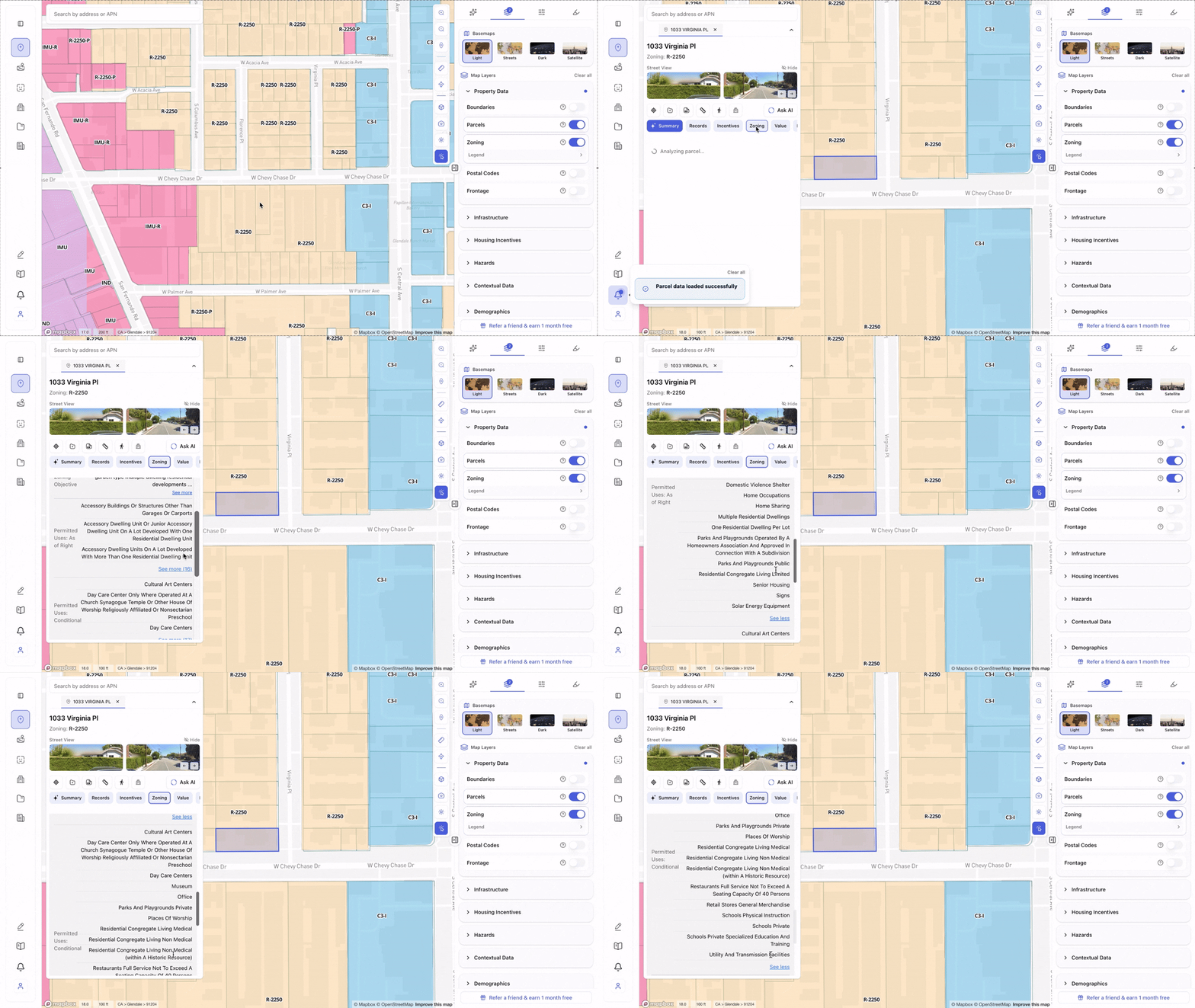
Two categories. One scroll. Seconds – not hours.
The Takeaway
A CUP is the middle ground in zoning not by-right, not prohibited. It comes with conditions, a public process, and real uncertainty. In Los Angeles, nearly 60% of applications face community opposition.
Know your entitlement pathway before you make an offer. Archiwise shows you permitted uses and conditional uses the moment you click a parcel – from the actual zoning code, for the actual site, in seconds. Not a starting point for research. The answer itself.
See what’s permitted on any site – before you commit.
Most developers find out about CUPs after an offer is signed and the clock is already running. The ones who move faster are the ones who know before any of that happens.
Learn more
ArchiWise helps developers, investors, architects, and brokers go from address to decision in minutes, not weeks.
Whether you’re screening sites for multifamily development, evaluating zoning constraints, surfacing incentive eligibility like QCT and LIHTC, or assessing hazard risk before committing capital, ArchiWise runs every layer of analysis in one place.
Explore how ArchiWise helps teams screen development sites, analyze zoning, and make confident go/no-go decisions faster.