

By ArchiWise Team
Every deal your team passes on because research took too long is a deal a better-equipped competitor just closed.
That’s the reality of real estate development in 2026. Capital is expensive. Timelines are tight. Yet most teams are still screening sites the same fragmented, manual way they did a decade ago.
The right site selection software changes that. It helps you screen more sites faster, catch problems early, and find value others miss. But not all tools are built for this. Knowing what to look for is the difference between a tool that pays for itself and one that just adds another tab to your workflow.
Why Manual Site Selection Is Broken
Most teams still screen sites the same way: a broker sends listings, an analyst opens browser tabs, documents get downloaded, a spreadsheet gets updated, a consultant gets called. Somewhere in that chain, things get missed.
The problem isn’t effort. It’s that the data is fragmented across dozens of sources, and the process doesn’t scale. Evaluating one site properly can take days. For teams looking at 10 to 20 opportunities a month, that bottleneck doesn’t just slow you down – it limits how many deals you can even consider.
Scale that across multiple jurisdictions and the risk compounds. Critical details get missed. Decisions get made on incomplete information. And problems that could have been caught on Day 1 surface weeks later – after money has already been spent.
Good site selection software solves this. It doesn’t just organize data – it turns fragmented research into fast, reliable answers. And in 2026, the best tools do this by answering five specific questions that every developer needs to ask before committing to a site.
What to Look for: The 5 Questions Your Software Must Answer
When evaluating any site selection platform, use these five questions as your checklist. If the software can’t answer all five clearly and quickly, it’s not built for serious development work.
Question 1: Where Are the Best Opportunities?
If your tool only searches listed inventory, you’re already behind. The most valuable development sites are often off-market – underutilized parcels, motivated sellers, and mispriced density that no one else has flagged yet.
Look for software that lets you search the full market using plain-language criteria – not just MLS or CoStar listings. It should score parcels by development potential, identify underutilized land through satellite imagery, and surface off-market opportunities alongside listed ones.
The output should be a ranked, scored shortlist – not a raw data dump – so your team can focus on real prospects from the start.
Question 2: What Can I Actually Build Here?
Once you have a site, you need to know what’s buildable – fast. What uses are permitted? How many units can you fit? Are there height limits, setback requirements, or density bonuses that could change the deal entirely?
Good software gives you parcel-specific answers, not generic zone summaries. It should identify permitted versus conditional uses, calculate FAR (the ratio of total floor space to lot size), flag overlay constraints, and surface density bonuses that base zoning alone won’t show you.
Every figure should cite its source. A number you can’t trace back to official municipal data won’t hold up in a committee meeting – or in due diligence.
Question 3: Is This a Good Location?
What’s buildable on a parcel only tells part of the story. The context around it matters just as much. Is the submarket growing or overbuilt? Are there hazards that could derail the project? Is infrastructure already in place, or years away?
Your site selection software should cover four layers of location context:
- Hazard check: flood zones, seismic risk, fire hazard, soil contamination, and environmental overlays. These are the leading cause of deal delays – and the easiest to catch early if your tool surfaces them automatically.
- Infrastructure access: water, sewer, and utility capacity; planned road and transit projects. Infrastructure gaps discovered after closing can add major cost or kill a project entirely.
- Demographics: population growth, income trends, employment, and walkability. This tells you whether real demand exists for what you’re planning to build.
- Market comps: development pipeline, absorption rates, rent growth, and competing projects nearby. Knowing a submarket is overbuilt before you commit is the difference between a great project and a stranded asset.
Question 4: Do the Numbers Work?
Feasibility needs to happen before the LOI, not after. Once sunk costs are on the table, objective decision-making gets harder.
Look for software that runs pro-forma estimates at the screening stage – before you’ve engaged a consultant. It should show you the buildable envelope, unit mix scenarios, density calculations, and whether any bonus programs could unlock more value than base rules suggest.
This is where hidden value gets found or missed. A density bonus that adds 8 units to a project changes the entire pro-forma. You want to find that before signing, not after.
Reports should be one-click and committee-ready – clean, shareable, and fully cited.
Question 5: What’s the Approval Path?
Site selection doesn’t end at “can I build it.” It ends at “will it actually get approved.” A site that looks viable on paper can still stall for months at the planning commission.
The best site selection tools give you entitlement context as part of the screening process: historical approval rates for similar project types in that jurisdiction, typical timeline estimates based on real outcomes, and patterns in how local planning commissions tend to decide. One district may approve 89% of similar projects; an adjacent one approves just 41%. That gap belongs in your acquisition model.
Knowing the realistic approval path before you commit – not after – is what separates a confident acquisition from a costly surprise.
Red Flags: What Bad Site Selection Software Looks Like
Before committing to any platform, watch out for these warning signs:
- Built for retail, not development. Many platforms were originally designed for retail site selection – foot traffic, trade area scoring, consumer demographics. These metrics don’t address what developers need. Make sure the tool was purpose-built for real estate development.
- Black-box scoring. A score that can’t be explained won’t survive a committee meeting. Every output should cite its source and trace back to official data.
- Stale data. Regulations change. A platform that isn’t updated continuously after code amendments creates real compliance exposure.
- Listed inventory only. If the tool only screens MLS or CoStar listings, it’s missing the vast majority of viable land opportunities.
- No hazard or infrastructure layer. A site’s build rights mean nothing if a flood zone or utility gap makes it unviable. These layers should be part of every screening, not an add-on.
How ArchiWise Answers All 5 Questions
ArchiWise is an AI real estate decision platform built specifically for pre-development. It answers all five questions – in one workflow, without switching tools.
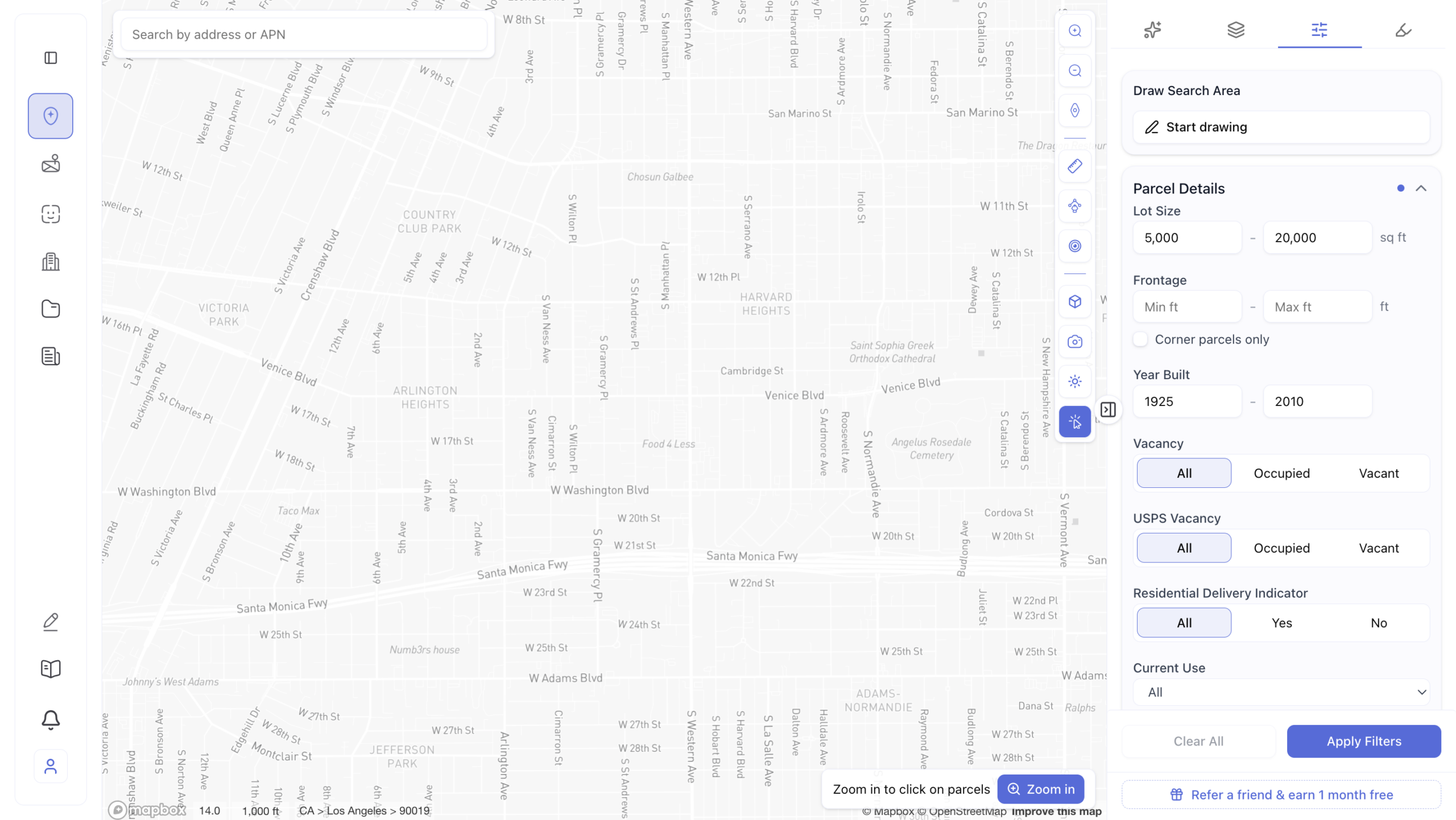
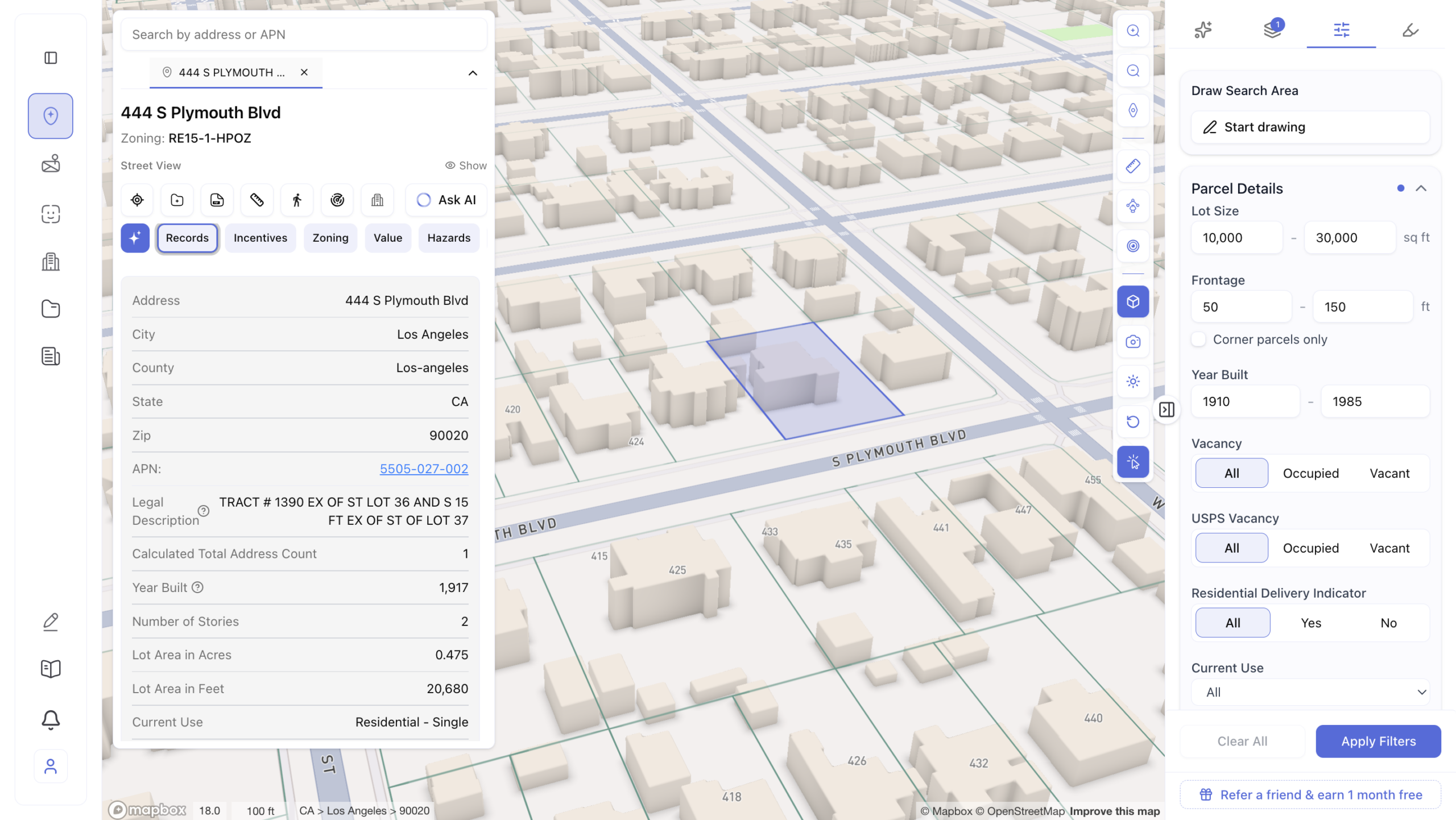
- AI Site Selection searches the full market – listed and off-market – scoring each parcel by development potential and opportunity.
- AI Zoning Expert delivers a full parcel-level breakdown: permitted uses, FAR, height limits, setbacks, overlays, and density bonuses – all cited from official municipal sources, updated daily.
- Area Intelligence pulls from 50+ authoritative sources – including USGS, FEMA, EPA, the Census Bureau, and CoStar – to give you hazard exposure, infrastructure access, demographics, and market comps in one place.
- Feasibility Analysis runs pro-forma estimates, buildable envelope modeling, and unit mix scenarios at the screening stage – before any consultant is engaged.
- Entitlement Viability draws on a database of real project outcomes to show historical approval rates, timeline forecasts, and planning commission tendencies by jurisdiction.
The results are concrete. One user found a density bonus that turned a 24-unit project into 32 units on a site listed at $1.8M – before a dollar was committed. Another caught an overlay restriction their title company and attorney both missed, saving roughly $380,000 in redesign costs and six months of lost time.
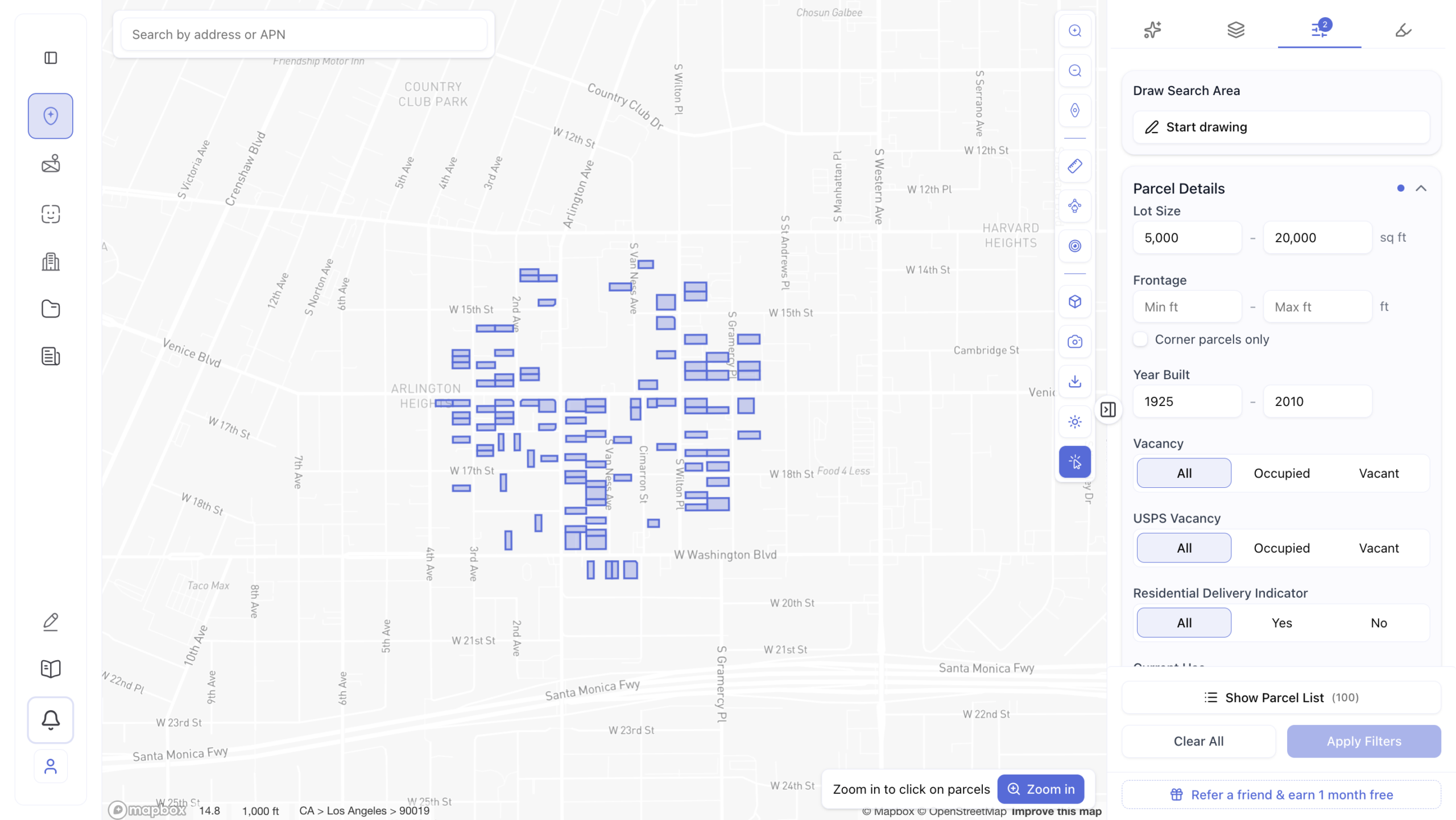
ArchiWise covers 3,000+ counties and 19,000+ cities across all 50 states, representing over 90% of US real estate development activity. Data is updated daily, and the platform reports 99%+ accuracy across all markets (company-reported).
The Developers Winning in 2026 Decided in Pre-Development
Most project wins and losses are determined before design begins. The quality of your site selection process – and the tools powering it – determines whether you find the right site fast enough, catch the problems early enough, and build the case clearly enough to move.
According to JLL’s 2025 Global Real Estate Technology Survey, 92% of CRE occupiers are now running AI pilots – but only 5% report achieving all their AI program goals. The difference isn’t enthusiasm. It’s whether the tool was actually built for the workflow.
The developers closing more deals, faster, in 2026 aren’t working harder. They’re screening smarter.
The best sites don’t wait. By the time most developers finish their research, the deal is already gone. ArchiWise cuts that time down to minutes – showing you what’s buildable, what’s risky, whether the numbers work, and what your approval chances look like, all before you spend a dollar. Faster decisions. Fewer surprises. More deals closed. Try ArchiWise today at archiwise.ai and find your next deal before your competition does.
Learn more
ArchiWise helps developers, investors, architects, and brokers go from address to decision in minutes, not weeks.
Whether you’re screening sites for multifamily development, evaluating zoning constraints, surfacing incentive eligibility like QCT and LIHTC, or assessing hazard risk before committing capital, ArchiWise runs every layer of analysis in one place.
Explore how ArchiWise helps teams screen development sites, analyze zoning, and make confident go/no-go decisions faster.