

A developer buys a plot of land. The location looks perfect. The price feels right. Then, months later, they find out a hidden rule blocks half the units they planned to build. Sometimes, the zoning code doesn’t allow the project at all.
Stories like this happen more often than people think. In real estate, the biggest risk isn’t always the market or the price. It’s the site itself.
Every piece of land comes with rules attached. Zoning laws, height limits, overlays, and more. Most of these rules are buried in long, confusing documents that few people ever read all the way through.
This is why some of the costliest mistakes in real estate are the ones nobody sees coming. The good news is, these risks are avoidable, if you know where to look.
The Real Cost of Getting a Site Wrong
When a real estate deal goes wrong, it’s rarely bad luck. Usually, something important got missed.
Skipping careful due diligence can be expensive. Buyers who don’t check every detail often lose $50,000 to $150,000 fixing problems that could have been caught earlier, according to a recent due diligence guide.
Zoning problems add up fast, too. Getting a zoning variance or rezoning approval can take two to six months. Once you add attorney fees, surveys, and hearing costs, total expenses often run $2,000 to $15,000 or more for a complex case. If the request gets denied, you may need to pay more to appeal, or redesign the whole project, after months of paying interest, taxes, and other holding costs.
Some experts say zoning issues are the single biggest reason real estate projects get abandoned. A missed overlay. An outdated assumption about how much you can build. A zoning amendment nobody noticed. Any one of these can quietly kill a project, sometimes after real money has already been spent.
This isn’t just a problem for small developers. Research from JLL shows that zoning and entitlement uncertainty is one of the top reasons real estate deals stall or fall apart completely.
These aren’t rare, unlucky events. They are common. And they are avoidable.
The Risks Other People Miss
Overlay Districts and Non-Conforming Uses
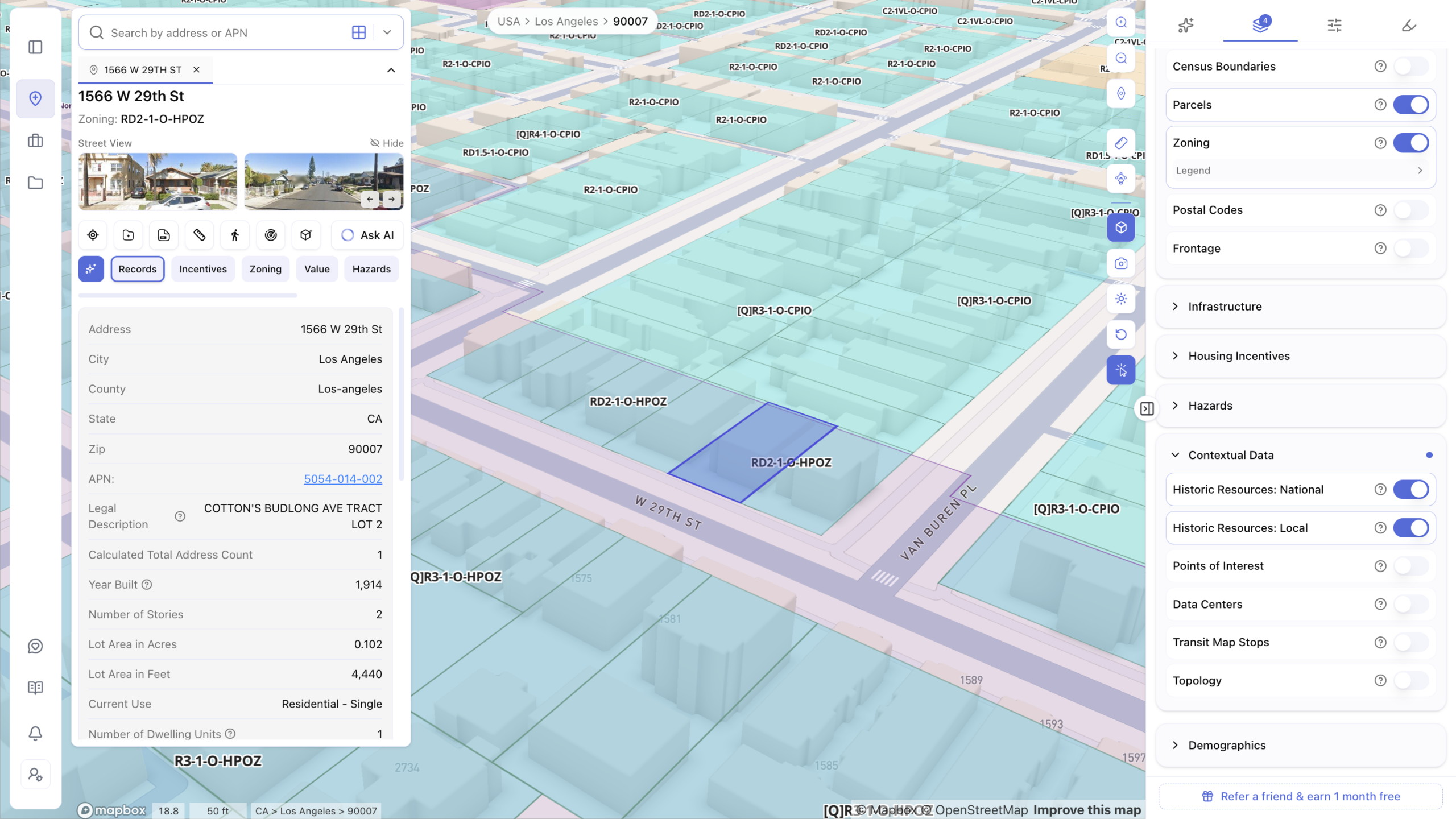
Zoning isn’t just one label on a map. Many properties sit inside “overlay districts,” extra rules layered on top of the base zoning. A historic overlay, for example, can block you from tearing down a building, even if the regular zoning allows it.
These overlays are often hidden in separate documents. A quick zoning lookup won’t show them. That’s why so many buyers miss this risk until it’s too late.
FAR, Density, and Setback Mistakes
FAR stands for Floor Area Ratio. It’s simply the amount of building space you’re allowed, compared to the size of your lot. If the FAR is 1.0 and your lot is 10,000 square feet, you can build about 10,000 square feet of floor space. Not more.
FAR rules, density limits, and setback rules (how far a building must sit from the property line) are often spread across many pages of code. They also interact with each other in ways that are easy to get wrong.
Entitlement and Approval History
Before buying land, it helps to know how the local planning board has acted in the past. Have they denied similar requests before? Are there pending changes to the zoning rules?
This history is rarely written down in one place. Most developers only learn about it the hard way, after spending months, and real money, trying to get approval.
Comparing Multiple Sites at Once
Most investors aren’t looking at just one property. They’re comparing several sites at once, often across different cities.
The problem is, each site usually gets a different amount of attention. One gets a careful review. Another gets rushed because of a deadline. This means the property you finally choose might not be the best one. Just the one someone had time to check properly.
Confusing and Outdated Zoning Data
Here’s a fact that surprises most people: the United States has more than 30,000 local zoning jurisdictions. Only a small share of them keep their codes in a modern, searchable database.
This means getting a real answer to a zoning question often means calling city hall directly, and hoping the person on the phone has the latest information.
Why Traditional Site Screening Falls Short
So why do so many of these risks slip through?
It’s not because people are careless. It’s because doing this research the old way takes a lot of time.
A single zoning review can take three to five business days, just for one property. If you’re comparing ten or twenty properties a month, that adds up fast.
It costs money, too. Professional zoning research typically runs $1,500 to $5,000 per property. In some markets, all the costs together can reach $2,500 to $15,000 for one site.
By the time a report finally comes back, the best properties are often already gone. Snapped up by someone who moved faster.
The problem isn’t a lack of knowledge. It’s a lack of speed.
How AI Is Changing Site Selection and Feasibility
This is where artificial intelligence is starting to make a real difference.
AI tools can now read and understand zoning codes across thousands of cities. What once took three to five days can now be done in under four hours.
These tools check the details people often miss, like setbacks, density, FAR, parking rules, and overlays, all at once, instead of one at a time.
This isn’t just about saving time. Faster research means lower holding costs. It means you can screen more properties, faster, and make confident decisions before someone else does.
How ArchiWise Helps You See What Others Miss
This is exactly the gap ArchiWise was built to close.
ArchiWise is an AI-powered platform that brings zoning, overlay, and land-use data together in one place. Instead of digging through scattered city websites and old PDFs, you get clear answers, fast.
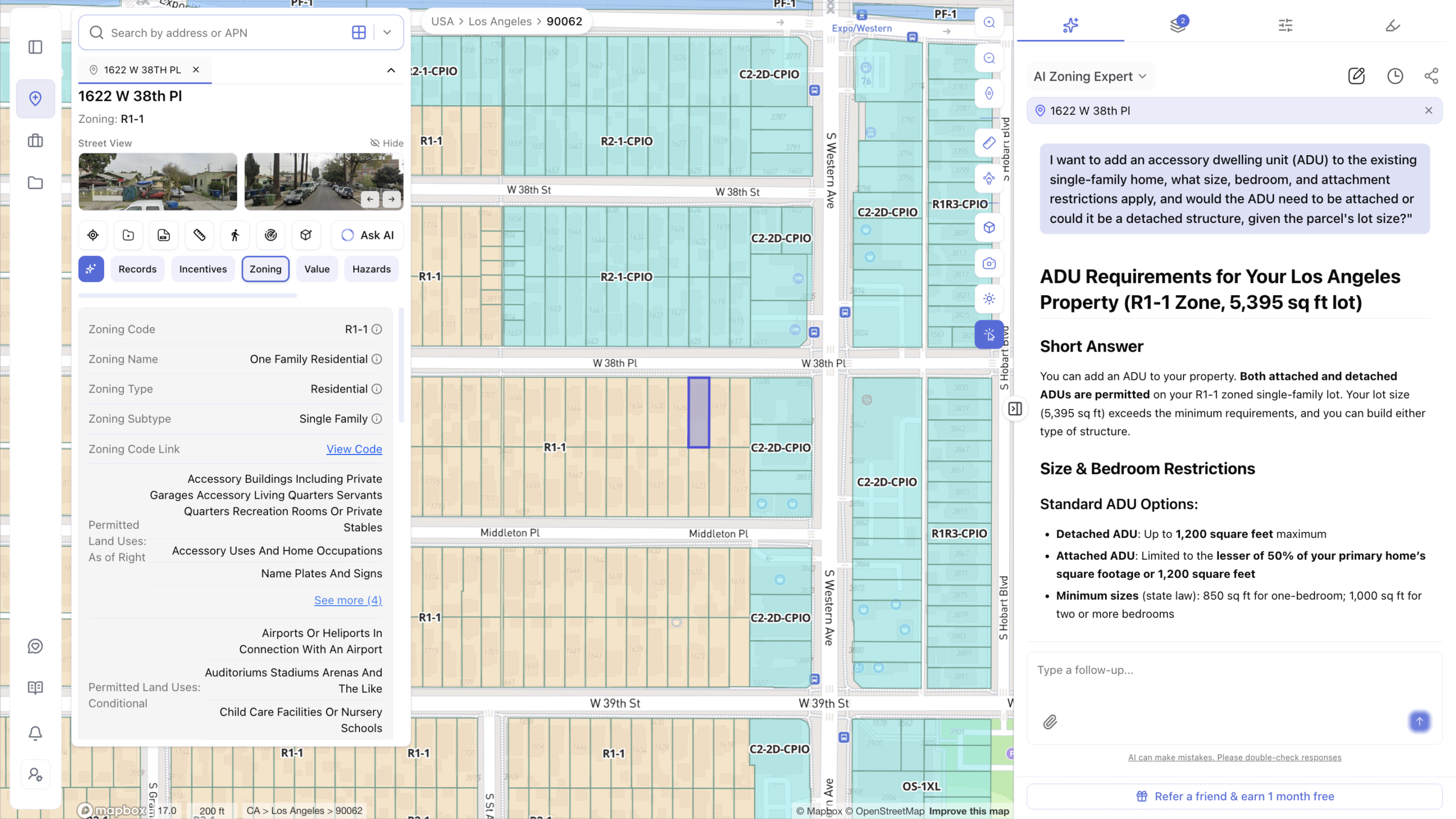
Here’s how it helps with the exact problems we just covered:
- Overlay districts: ArchiWise automatically flags overlays, like historic or environmental districts, that a basic zoning search would miss.
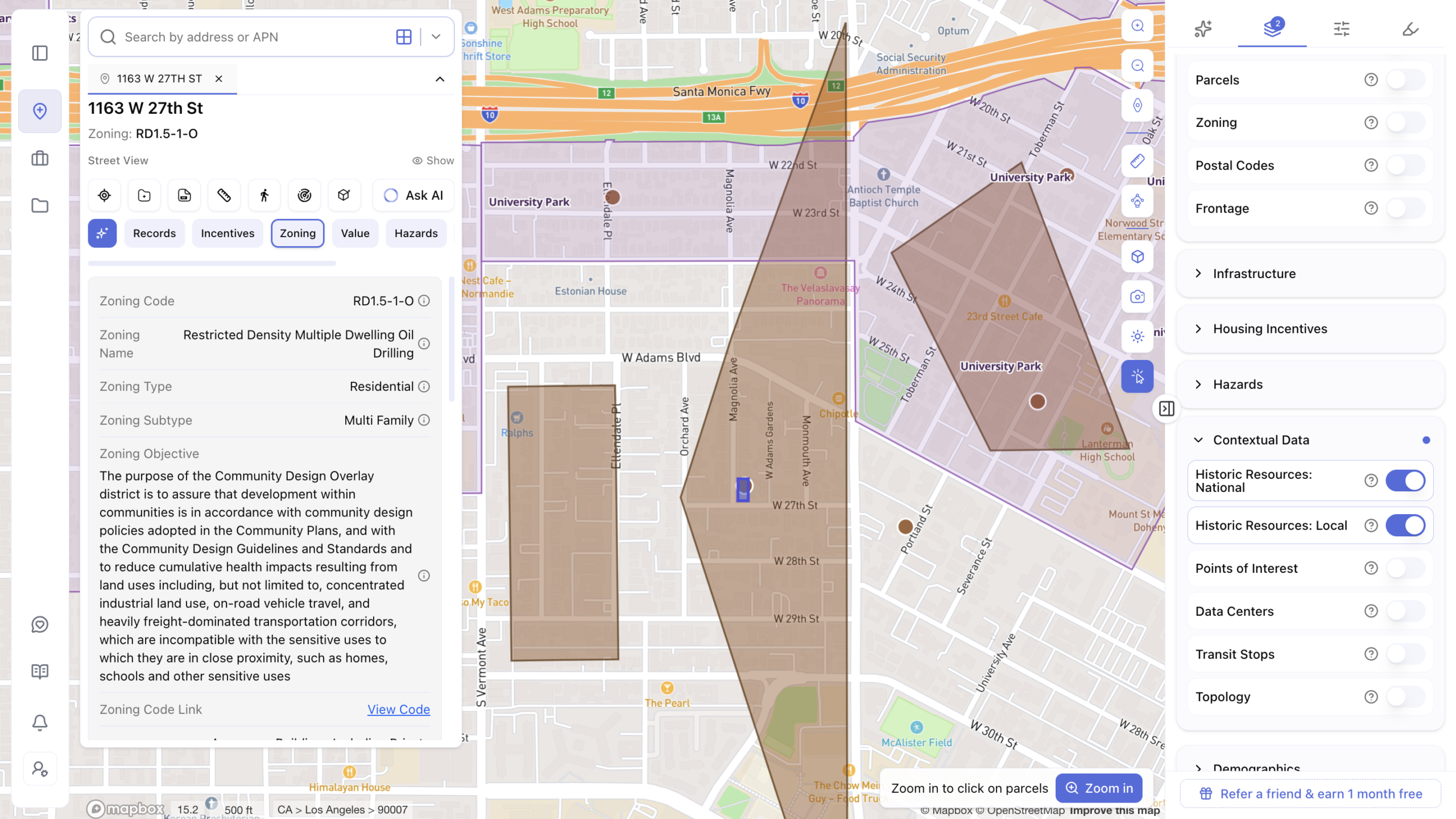
- FAR and setback errors: The platform calculates FAR, density, and setback limits for you, pulled straight from current code.
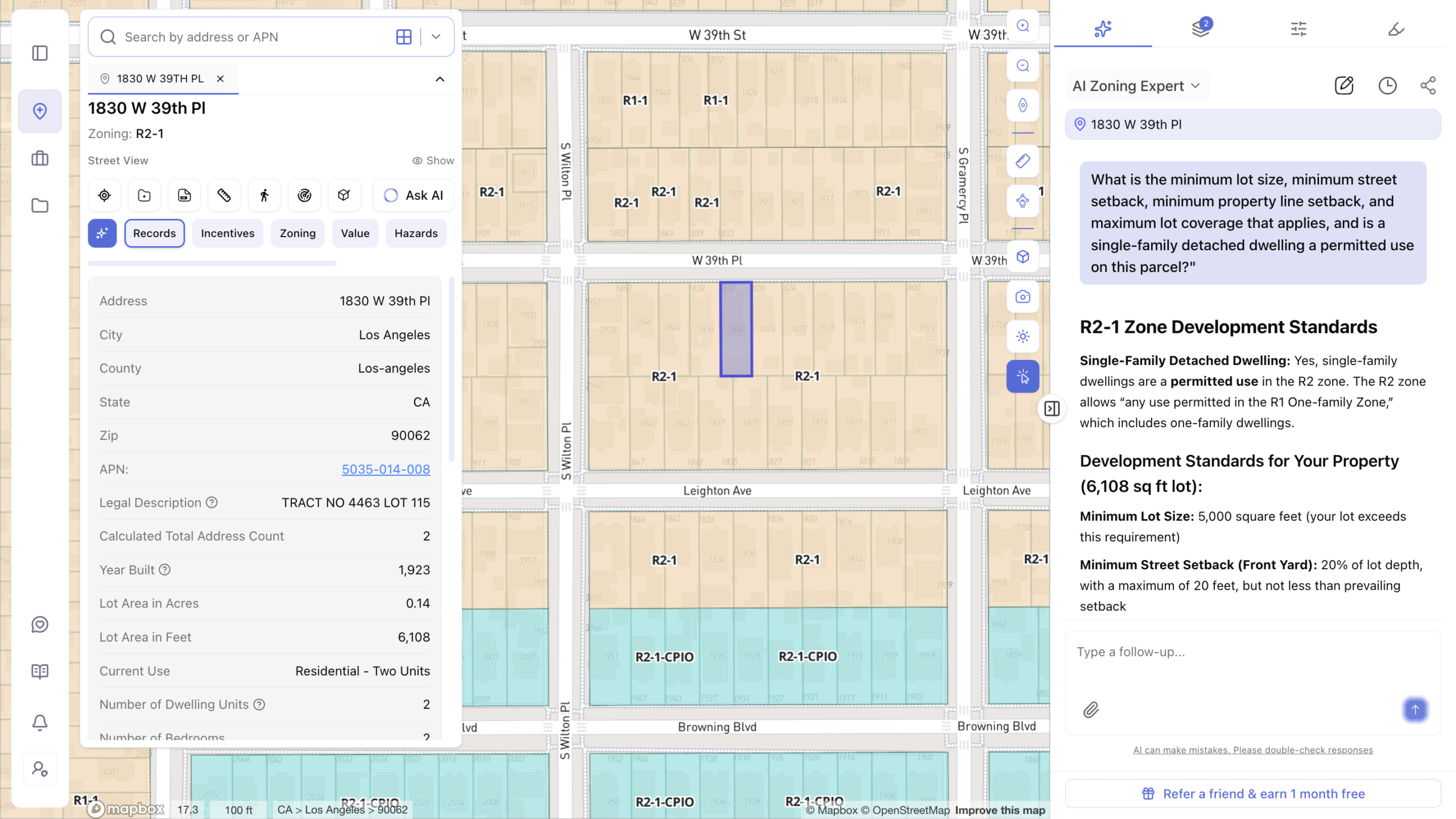
- Comparing sites: You can run multiple sites, in different cities, through the same checks, so your comparisons are fair and consistent.
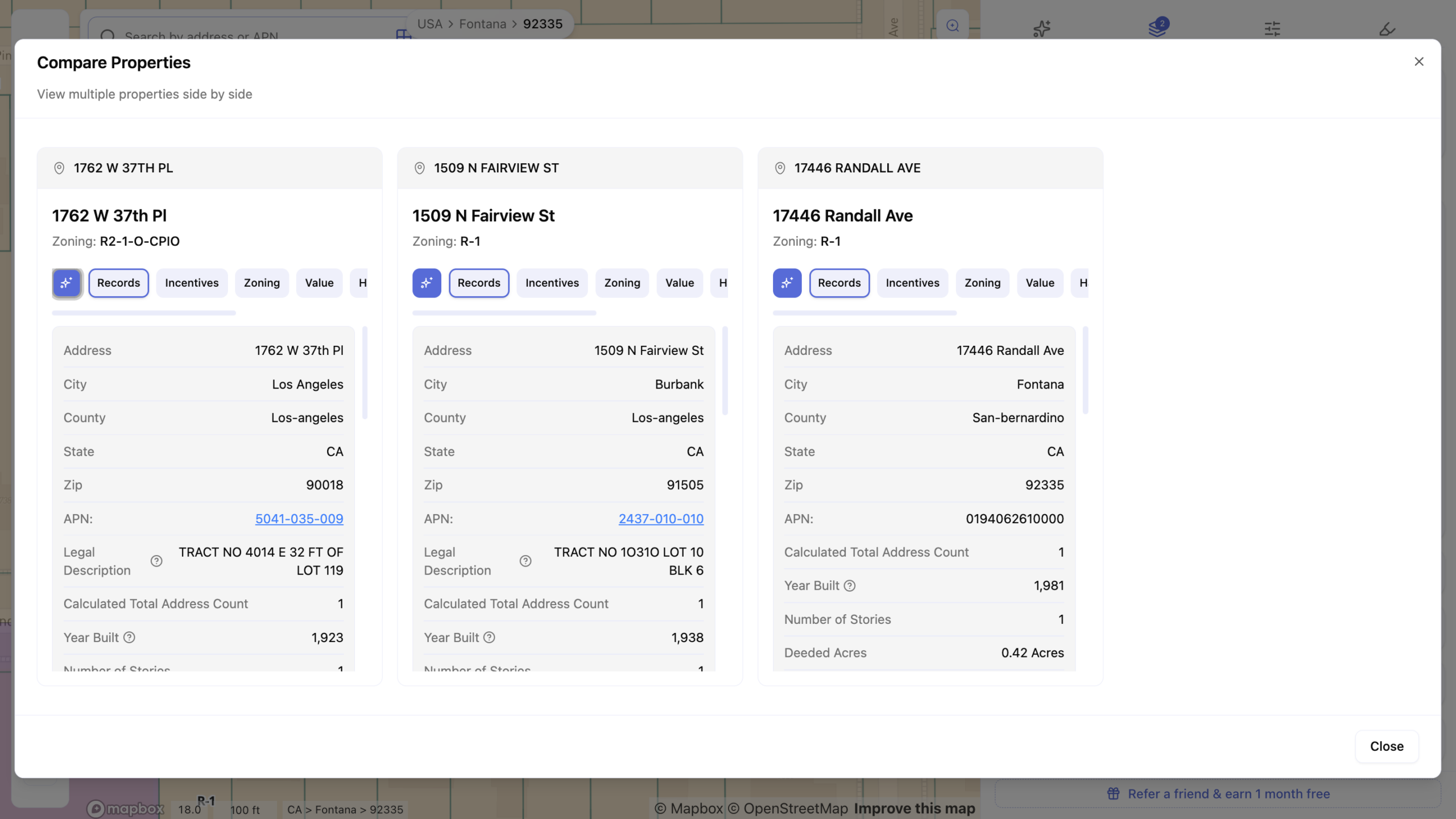
- Fragmented zoning data: With more than 30,000 separate zoning systems across the country, ArchiWise’s biggest strength is pulling all that scattered information into one searchable place.
- Speed: What used to take three to five days, and cost thousands of dollars, can now take hours.
Teams that used to spend a week, and thousands of dollars, checking a single property can now get clear answers in hours, for many properties at once.
Want to see it for yourself? ArchiWise offers a free trial. Run your own property through it and see what turns up. Pricing depends on your needs, so check the ArchiWise pricing page for details.
Stop Losing Deals to What You Didn’t See
Here’s the truth: most real estate deals don’t fail because of price. They fail because of what’s hiding in the site itself. The fine print nobody had time to read.
Speed is the real advantage now. The developer who checks twenty sites this week will always beat the one still waiting on a report for site number one.
Don’t let your next deal fall apart over a rule you never saw coming.
Run your next site through ArchiWise right now, before you write another offer, sign another contract, or lose another deal to someone who moved faster than you.
The most expensive mistakes in real estate are the ones you never see coming. Until now.
Learn more
ArchiWise helps developers, investors, architects, and brokers go from address to decision in minutes, not weeks.
Whether you’re screening sites for multifamily development, evaluating zoning constraints, surfacing incentive eligibility like QCT and LIHTC, or assessing hazard risk before committing capital, ArchiWise runs every layer of analysis in one place.
Explore how ArchiWise helps teams screen development sites, analyze zoning, and make confident go/no-go decisions faster.