

By the time a great development site hits LoopNet, brokers have already fielded calls and five developers are already running numbers on it. The best deals rarely get listed at all – they move quietly, before the market even notices.
This is the reality of real estate development in 2026. Land costs are up. Margins are tighter. The window between spotting an opportunity and losing it to a faster competitor has never been shorter.
There are two kinds of developers right now. The first group reacts – they monitor listings, wait for broker calls, and compete on whoever moves fastest on the same inventory everyone else sees. The second group is already under LOI before the first group even knows a site exists.
The difference isn’t luck. It’s infrastructure. The second group uses AI site selection and real estate feasibility software to build a proactive acquisitions engine. This post explains exactly how.
Why the Traditional Development Process Is Broken
Most developers know the pain points. But it’s worth naming them clearly, because they’re structural – not just inconvenient.
You only see what’s listed. MLS, LoopNet, and CoStar show you what owners have chosen to put on the market. That’s a small fraction of all viable development opportunities. Every competitor is staring at the same listings – you’re not competing on insight, you’re competing on reaction time and luck.
Listings describe what exists, not what’s possible. This is where the real money hides. A basic listing tells you the lot size and the zoning designation. It almost never tells you the true buildable value of a site.
What is FAR (Floor Area Ratio)?
FAR is the ratio of total building floor area to the land area beneath it. A site zoned to allow a FAR of 3.0 but occupied by a single-story building is massively underutilized in development terms. That gap between current use and permitted density is where opportunity lives.
What is Pre-Development?
The research phase before design, financing, or construction begins – when teams evaluate whether a deal is worth pursuing. Most money lost in real estate disappears here, invisibly, through sunk costs on deals that never close.
Research is slow, manual, and compoundingly expensive. The average developer screens 30 to 50 sites to close just 1 or 2 deals. For each site, the team repeats the same process: pull zoning codes, cross-reference maps, check for overlays, model feasibility in a spreadsheet, and call the planning department. That cycle takes 4 to 6 weeks per serious candidate – and every failed deal leaves tens of thousands of dollars in wasted time behind it.
The problem isn’t a lack of data. It’s a lack of decision intelligence.
How ArchiWise Finds What the Market Can’t See
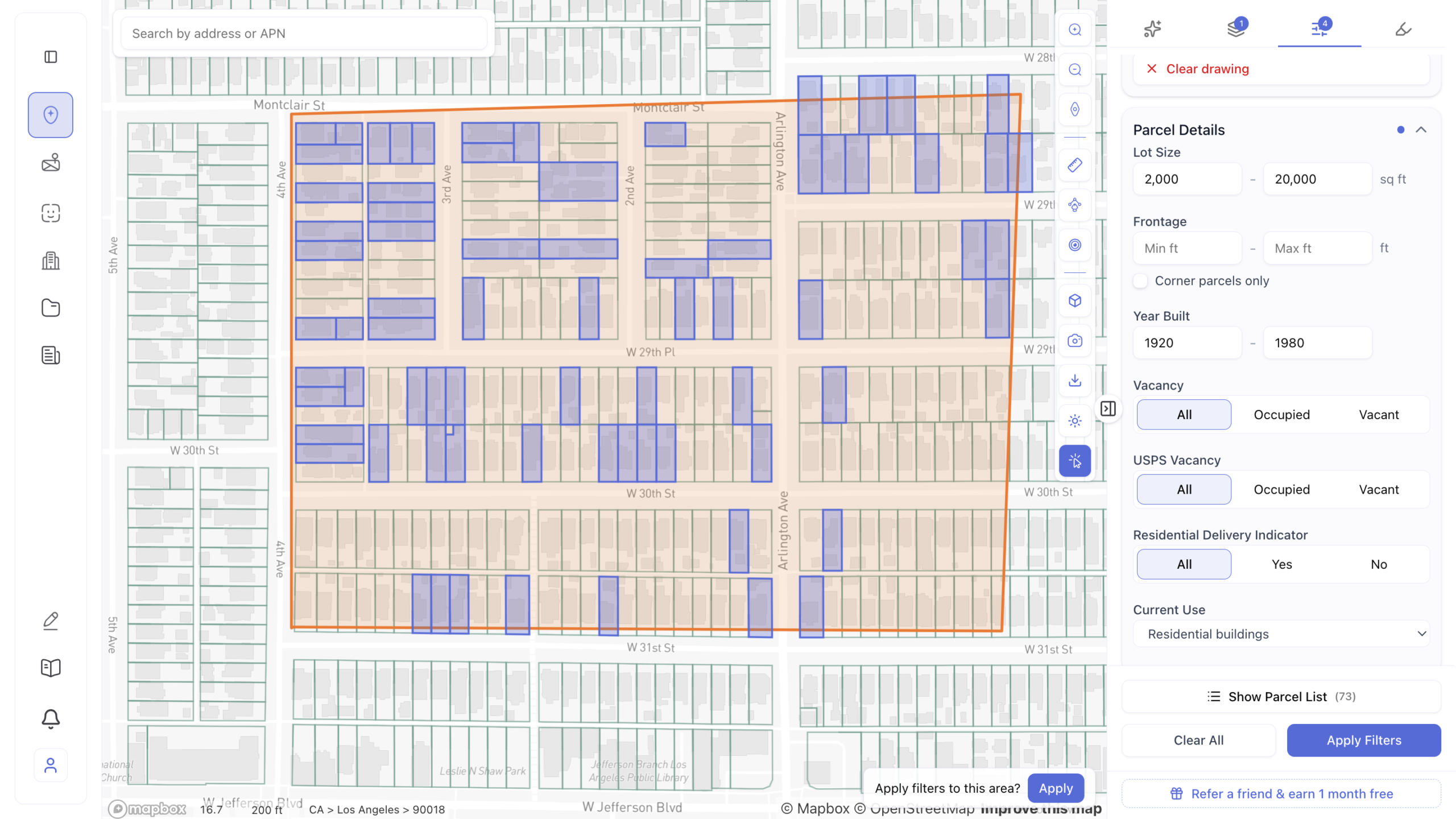
ArchiWise is an AI-powered pre-development platform built to solve this problem. It doesn’t wait for sites to be listed. It scans every parcel in a target submarket – filtering by zoning, permitted uses, ownership type, land vacancy, demographics, and satellite visual data – and scores each one by development potential.
Developers describe their ideal project in plain English. The platform returns a ranked list of opportunities across the full parcel universe, including off-market land the broader market hasn’t priced correctly yet.
Specifically, ArchiWise flags:
- Underutilized density. Parcels where the current use represents a fraction of what the zoning permits – listed at land value, not development value.
- Motivated ownership signals. Aging LLC structures, estate-held properties, and long-held single-owner lots with no recent activity often indicate sellers who haven’t engaged a broker yet.
- Overlooked density bonuses. Many municipalities offer density bonus programs rarely used because they require knowing where to look. In one documented ArchiWise example, a site listed at $1.8 million was found viable for 32 units instead of 24 – improving projected IRR from marginal to 16%.
- Hidden regulatory risk. Overlay zones that add restrictions on top of base zoning are frequently missed – including by title companies and attorneys. ArchiWise surfaces these before the developer is committed.
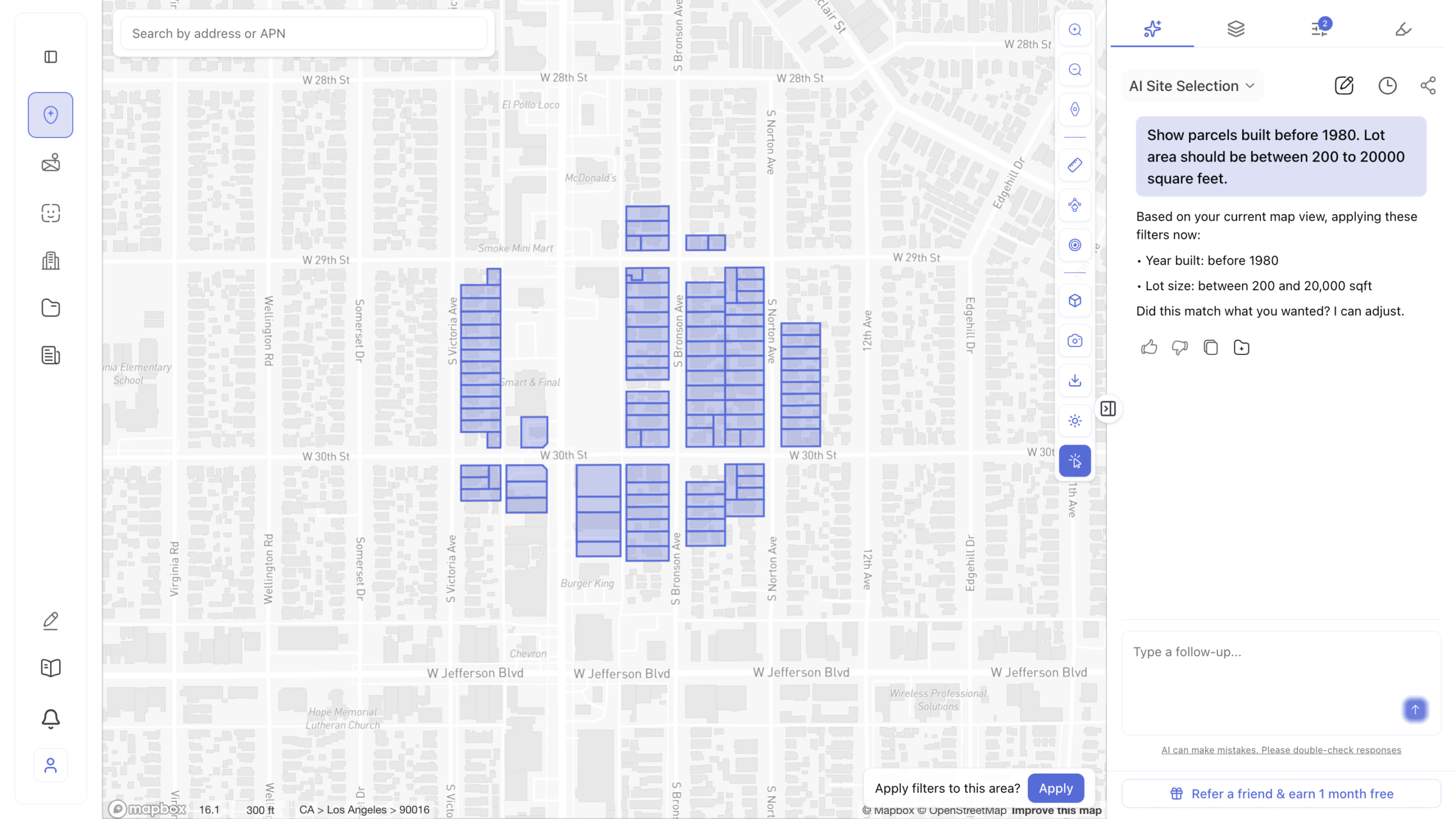
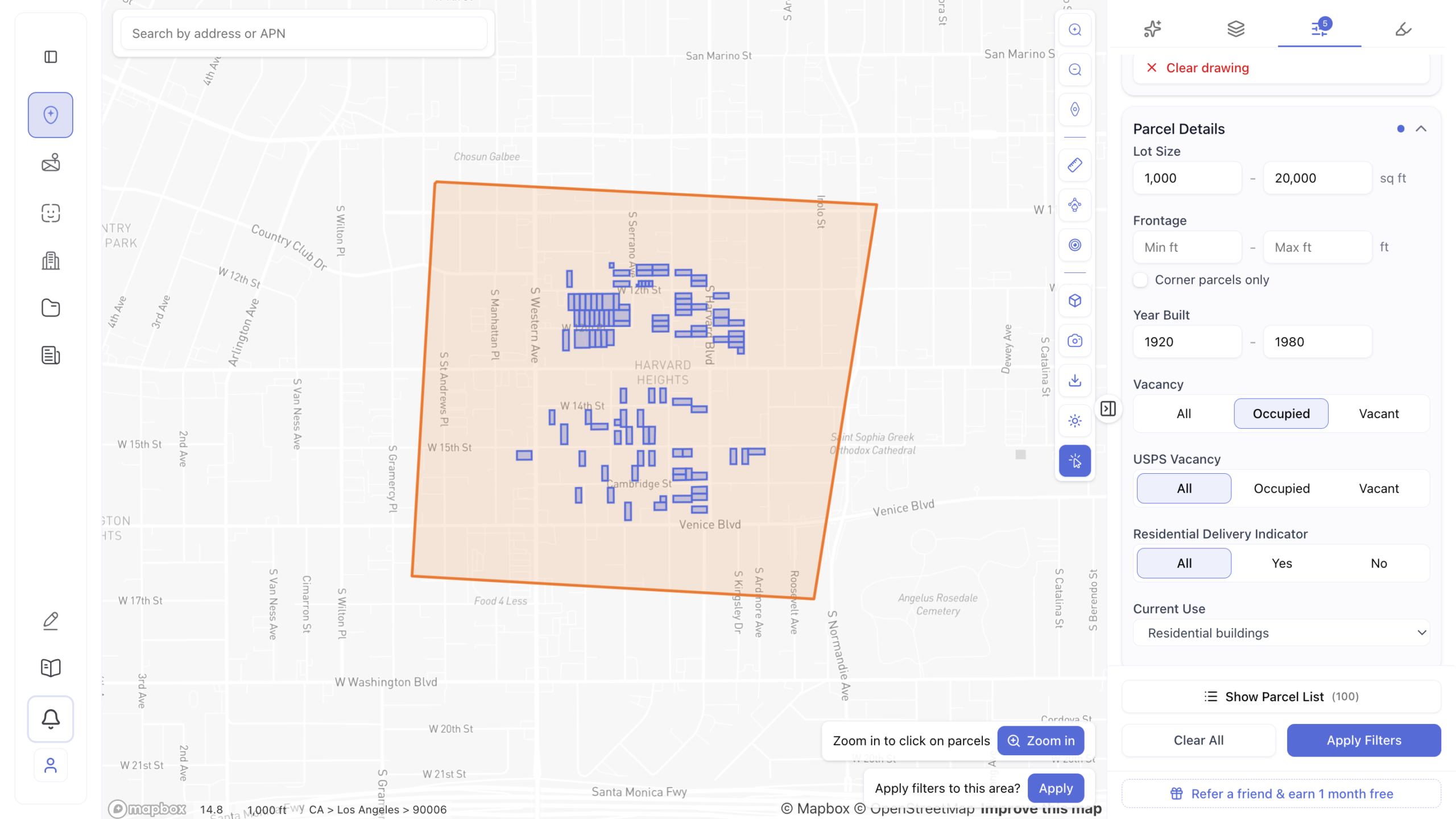
Each parcel receives an opportunity score. Teams rank and prioritize without manual cross-referencing across a dozen data sources.
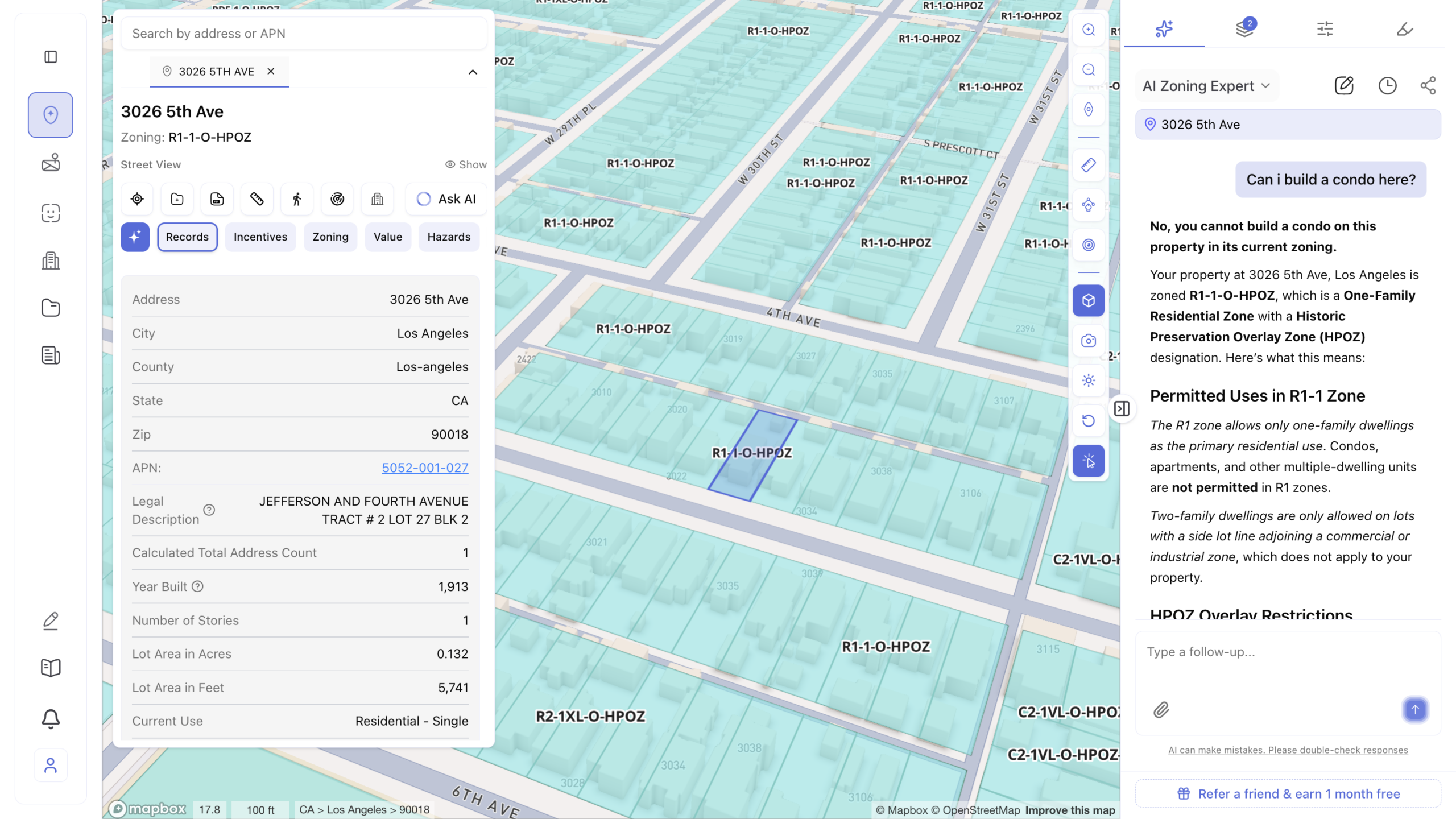
For any flagged parcel, the platform then runs the full analysis: permitted uses, density bonuses, setback requirements, height limits, parking minimums, buildable envelope scenarios, unit mix modeling, and pro forma inputs. Deal-killers surface on day one rather than day 45. In one real example, unexpected parking requirements cut 22% of leasable space on a mixed-use site and dropped the projected IRR from 14% to unworkable – caught before an offer was made.
The Risk Nobody Talks About: Entitlement
Zoning tells you what you’re allowed to build. Feasibility tells you if it makes financial sense. But there’s a third question that experienced developers know is the dangerous one: will the city actually approve it?
A site can be perfectly zoned, financially viable, and still die in the entitlement process – consuming years and legal fees before a shovel touches the ground. Traditional pre-development research goes silent on this question.
ArchiWise addresses it directly. The platform’s entitlement viability module benchmarks a proposed project against comparable approvals and denials in the same planning district, producing a data-driven approval likelihood score before the developer commits to pursuing entitlements at all.
This surfaces red flags that no zoning map shows:
- Projects that match the profile of recently denied applications in that specific district
- Overlay zones with documented histories of conditional resistance
- Districts where active downzoning discussions or pending general plan amendments could change the rules mid-process
The practical result: when comparing two sites that look equal on paper, a developer can rank them by entitlement risk – and choose the one more likely to actually get built.
How ArchiWise Changes the Way Acquisitions Teams Work
Pre-development research today is, at its core, an analyst bottleneck. One analyst can realistically screen 8 to 10 sites per month at full depth. Every site above that threshold gets a shallow review or doesn’t get reviewed at all – meaning missed deals by default, regardless of team quality.
ArchiWise doesn’t just make individual site analysis faster. It changes what the whole team can accomplish without adding headcount:
- Analysts who spent 3 to 4 days per site on zoning and feasibility now produce the same output in under an hour – freeing them for higher-judgment work.
- Acquisitions teams screening 15 to 20 sites per month are now screening 50 or more, same headcount.
- Early-stage consultant spend on basic feasibility checks is eliminated or deferred to later, higher-confidence stages.
- Partners and principals receive underwriting-ready parcel summaries instead of raw data to interpret themselves.
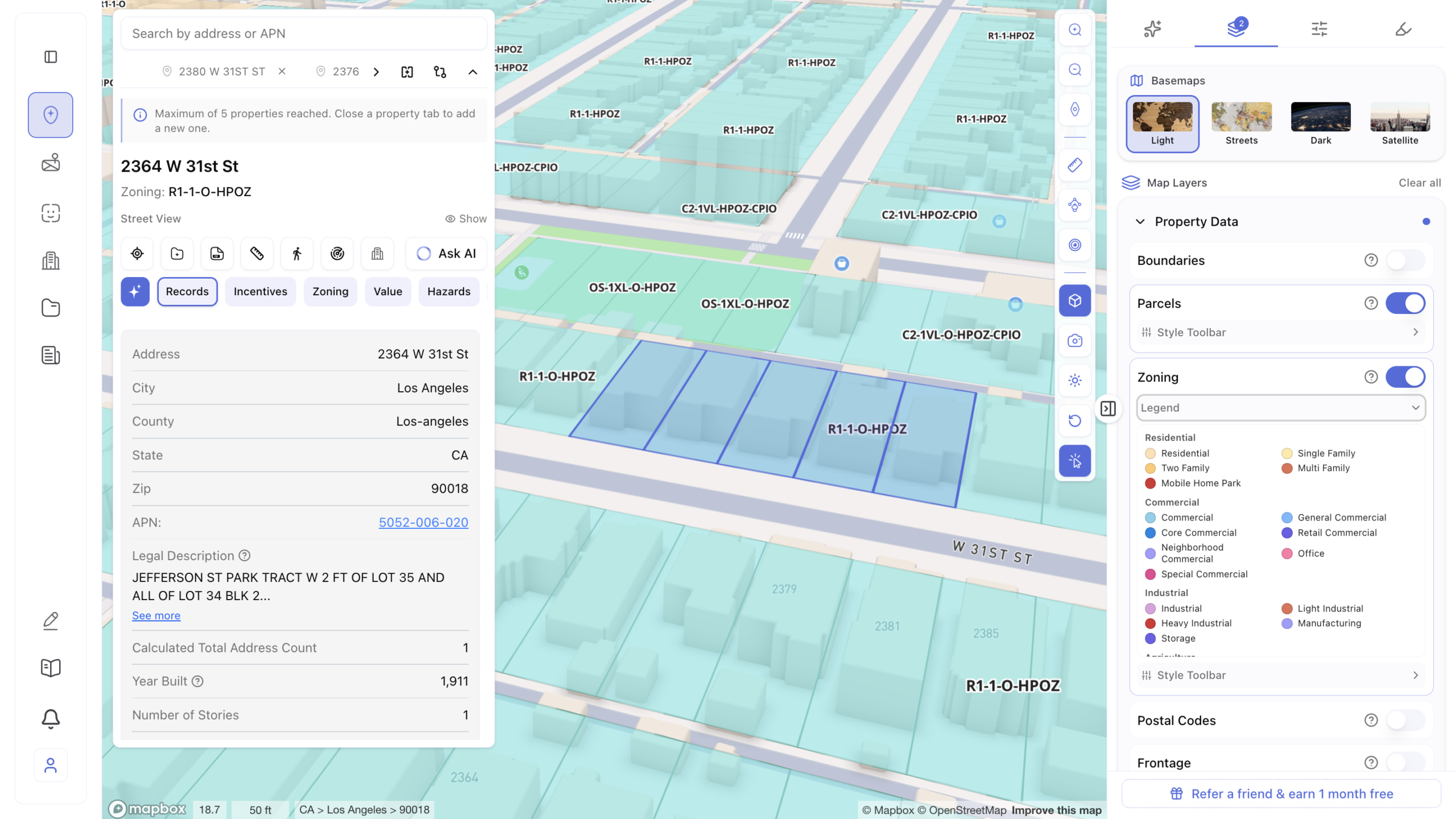
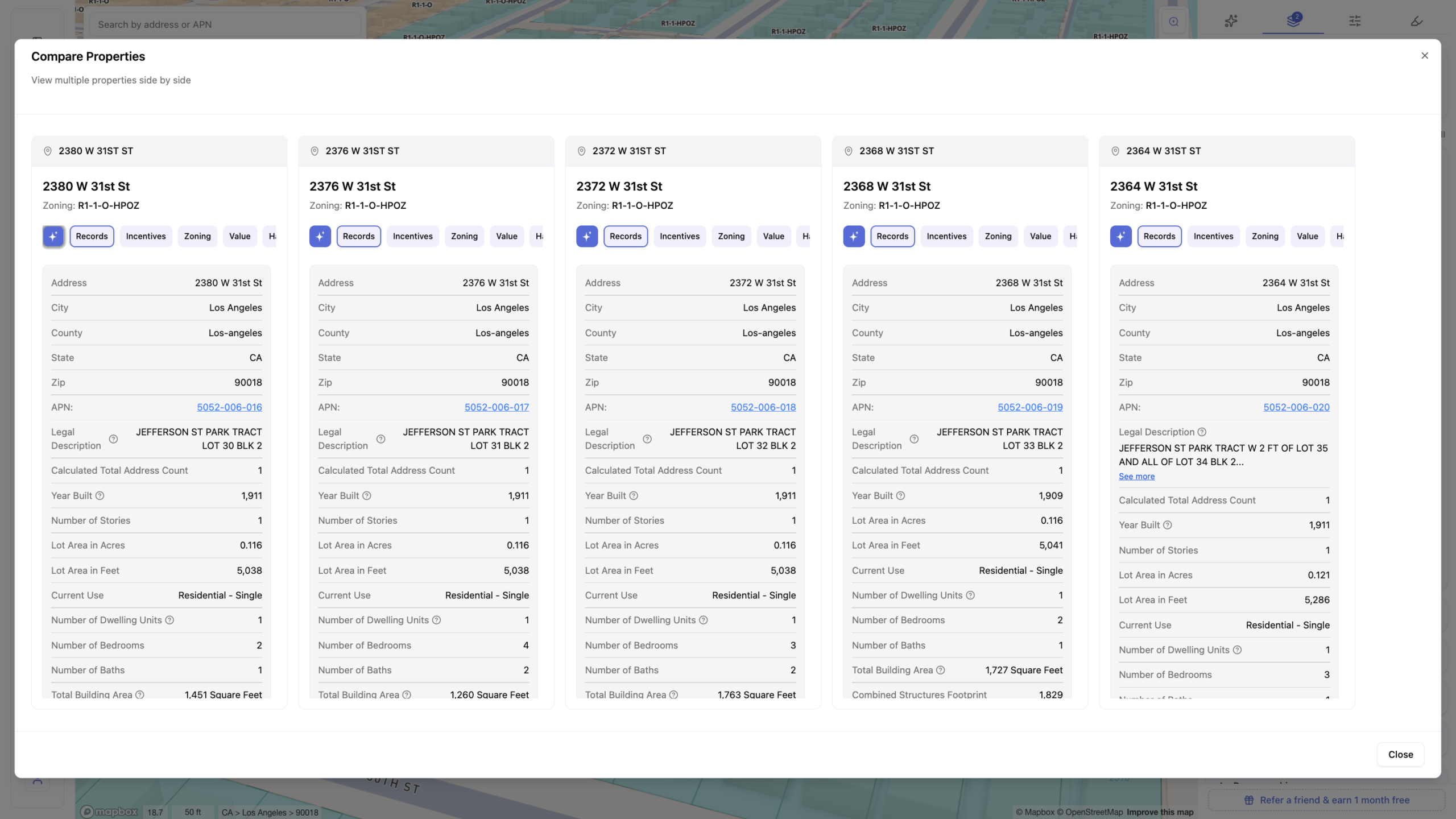
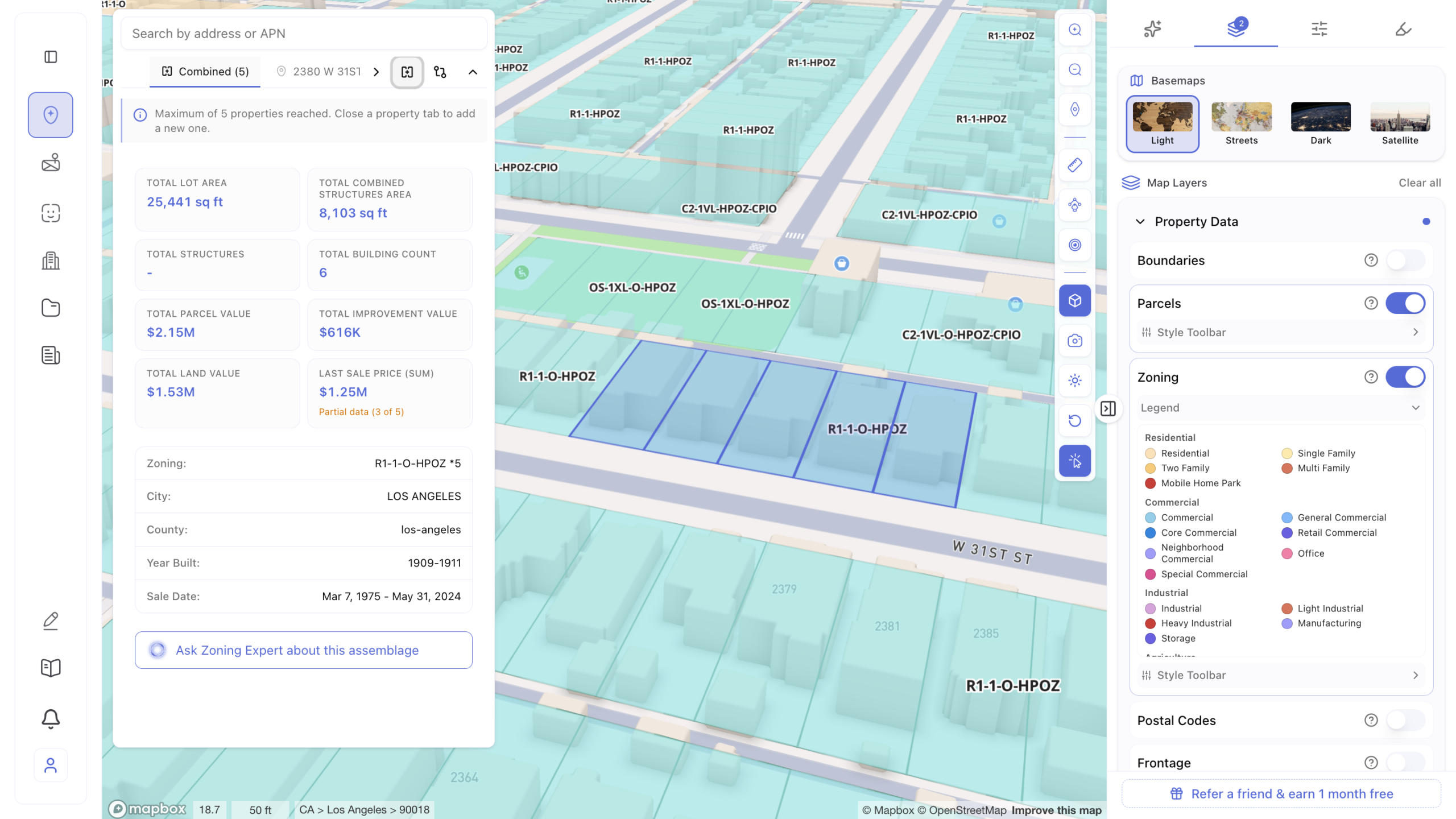
ArchiWise compresses a 4 to 6 week pre-development process down to roughly 8 days and is trusted by over 1,800 real estate professionals, from boutique developers to CBRE.
ArchiWise vs. The Alternatives
There are other tools in the market that touch parts of this problem. It’s worth being clear about where each one sits.
| Tool | Built for | Gap for developers |
| Acres | Site selection and land search | Focuses on sourcing and marketplace listings, not full pre-development feasibility |
| Zoneomics | Aggregates raw zoning data | Data without decisions – you still do all the analysis |
| Symbium | Consumer-facing permit lookup | Built for homeowners, not development-scale screening |
| TestFit | Massing and design optimization | Operates at the design stage – after site selection |
| Prophetic | Market analytics | Doesn’t cover the full pre-development workflow |
| ArchiWise | Full pre-development intelligence | – |
The distinction matters. ArchiWise isn’t a data tool you query when you already have a site. It’s a decision platform – built for the moment before capital is committed, before design begins, when the question is still: “should we even pursue this?”
The Bottom Line
Predictive site selection used to require large institutional teams and expensive consultants at every stage. That’s no longer true.
With a purpose-built AI pre-development platform, any acquisitions team can build a proactive pipeline – finding sites before they’re listed, underwriting faster than competitors, and walking into entitlements with data instead of hope.
The developers winning deals in 2026 aren’t the ones with the biggest teams. They’re the ones whose teams work on better information.
Every Day You Research Manually, a Competitor Is Screening 50 Sites With ArchiWise.
While you’re waiting on a planner callback, another developer is running feasibility on the same site – and ranking 49 others beside it. ArchiWise compresses weeks of pre-development work into 8 days. It finds sites that will never appear on LoopNet. It flags entitlement risk before you’re committed. It eliminates the analyst bottleneck entirely.
The market won’t slow down. ArchiWise puts you ahead of it.
Learn more
ArchiWise helps developers, investors, architects, and brokers go from address to decision in minutes, not weeks.
Whether you’re screening sites for multifamily development, evaluating zoning constraints, surfacing incentive eligibility like QCT and LIHTC, or assessing hazard risk before committing capital, ArchiWise runs every layer of analysis in one place.
Explore how ArchiWise helps teams screen development sites, analyze zoning, and make confident go/no-go decisions faster.